
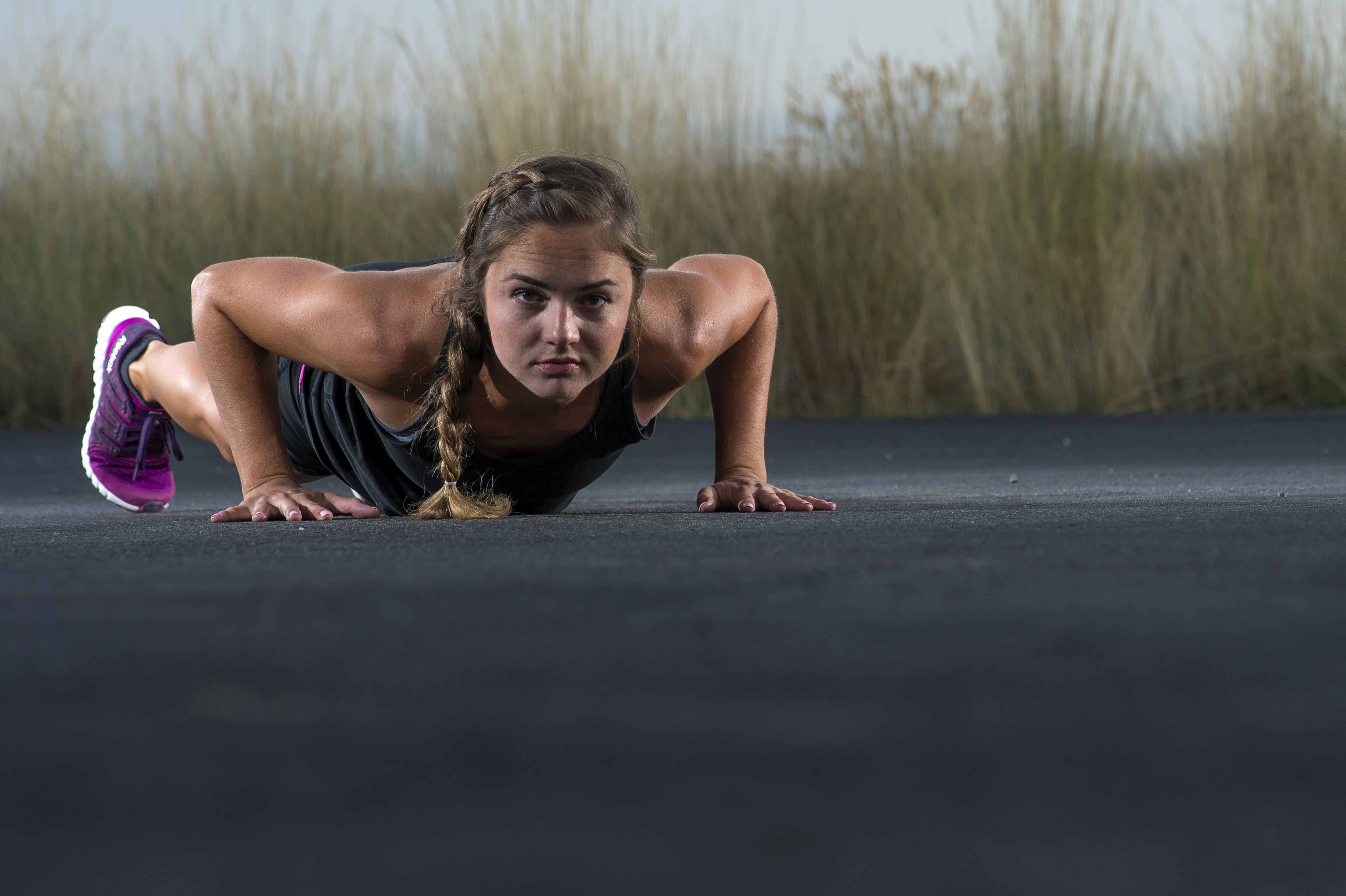
Top of the month to you my bruthas and sistahs of IRON! Coming out of our high movement variety agility-based block, we are moving into the first month of our outstanding 3-month block which really focuses on strength. In fact, it’s the only time of the year when we get to be total meatheads. Now we are going to be using less total exercises and variety, but we are getting very scientific about how we perform each movement.
The topic of our MasterClass this week will be all (or many things) about strength…why we need it and how we get it. Kind of a science meets common sense focus. If you can’t make the meeting, here are probably the 2 most important things to know:
- Strength is force generation capacity. You can measure it in many ways but it is basically how much weight you can lift 1 time. This is your 1 rep Max (1RM). Related to strength is hypertrophy, or the process of your muscles getting larger (gains, brah!). There are 3 keys to this process:
- Accumulated tension. This is essentially the volume of load performed in a session or cycle. Increasing this over a time period is critical. Total tension is dependent upon weight (or other resistance) and time (which is the tempo of reps). If tempo is the same here is the example:
- 6 x 2 with 100# = total tension of 1200#
- 5 x 8 with 70# = total tension of 2800# (superior tension)
- 3 x 20 with 20# = total tension of 1200#
- Myofibril microtrauma. Basically this is microscopic muscle damage that we want just a little of in most workouts when we are trying to get stronger. The body rebuilds according to this stimulus.
- Metabolic stress. Kinda what it sounds like. The workout doesn’t have to waste you, but it’s gotta have a little suck factor to be optimal.
- Accumulated tension. This is essentially the volume of load performed in a session or cycle. Increasing this over a time period is critical. Total tension is dependent upon weight (or other resistance) and time (which is the tempo of reps). If tempo is the same here is the example:
- Protein. You gotta pound the pro. 1 gram per pound of bodyweight (or lean body mass if you’ve got some adipose to drop) per day. No days off. No old wive’s tales…it’s essential and not bad for your health. I can cite lots of literature in the Class if you show. Training provides the stimulus but it’s the protein that allows for the strength and mass gains. This is called muscle protein synthesis for a reason. Training and not eating pro is almost a waste of time. In fact, high protein intake also secondarily stimulates muscle growth and fat burning, even if you didn’t train.
More in the MasterClass. Thursday Feb 4 at noon MST.
ID: 84931907393
Password: 908856
So now you see why we’ve been working on our dietary patterns and sourcing all this weight equipment. The strength block won’t work so well if you don’t have adequate loading and fuel. Exercise equipment is starting to become more available again but prices have gone up and there are shipping delays. Any time we have an exercise that looks marginal based on your setup, just reach out to me in the Forum or MasterClass and we can find suitable solutions.
WEEK OF: 2021-02-01 (1st week of month 1, Strength block)
| WOW | PREP | PRIMARY | ACCESSORY | TIPS |
| A X2 M/Th | Pushups x 20 MB Russian Twists x 20 (total) | Push Day 5 x 8 ↑ wt. each set Straight sets 1-2’ rests RPE 6-7-8-9-10 Barbell Bench Press Tempo 3121 Dumbbell Incline Press Tempo 2031 | DB Lat Raise 3 x 12-15 Double Progression OHP 3 x 12-15 Double Progression Free Choice Cardio 10-20’ L1 | Drive through the path of motion with total control |
| B X2 Tu/Fr | Tubing Unilateral Rows 10 per side Bar Hanging Leg Raises 2 x 10 (bent knees) | Pull Day 5 x 8 ↑ wt.each set Straight sets 1-2’ rests RPE 6-7-8-9-10 Deadlift 1-arm Row Assisted Pullup | BB Curl 3 x 12-15 Double Progression Cardio Cruise Reps 14’ total 1’L2/1’L1 Any mode | Squeeze from extended to coiled positions |
| C X2 W/Sa | Fwd. Swings 10 per side Lat. Swings 10 per side t Hops 2L & 2R t Jumps 2X | Leg Day 4 x 6 ↑ wt.each set Straight sets 2-3’ rests RIR 3-2-1-0 Goblet Squat Bulgarian Split Squat | 1-leg RDL 3 x 15 light HIRTCIRC Jump Rope 8′ of: 90”on/30”off Stretch as preferred | Press through a stable foot against gravity |
These sessions are going to be really fun and there are a few things to consider before we go into each workout.
- The preparatory (warmup) sequences are brief and to the point. They use movements which activate the muscles and patterns that each session emphasizes.
- The exercises used in the primary (main) component of each workout will stay the same for the entire month. Each week we’ll make slight adjustments to the methodology, but the moves and techniques will be fairly static. This gives your body a chance to really make some great adaptations.
- We won’t make any changes to the accessory sections. They will stay consistent for the full month. You’ll notice how they will get easier as we move along.
- We are using a push/pull/legs spit x 2. You do Workout A on Monday and Thursday. Workout B is Tuesday and Friday. Workout C is Wednesday and Saturday. Sunday is off. I realize this is a strict schedule and it may be challenging…just do your best to bang it out. You won’t be sorry, as the gains will start pouring in.
Workout A Breakdown: This is the day that uses the pushing emphasis (movement pattern not effort).
- Prep: 20 pushups any way you like, but experiment with hand placement variations. The med ball Russian twists are performed by leaning back slightly, heels up/knees bent. Look straight ahead as you take the ball from side to side. I prefer not to touch the ball to the ground to avoid excessive lumbar rotation and also to get more constant muscle tension. 20 total.
- Main: I apologize that this will be lengthy, but there are a lot of things to explain and I want this to be a good reference for you.
- 5 x 8 = 5 sets of 8 repetitions of each exercise.
- Increase weight each set, with the first being a light warmup, the next 3 being buildup working sets, and the final set being a fairly max effort.
- Straight sets means you do all sets of one exercise before the next (no circuits).
- 1-2 minute rests are essential. If you feel you need less rest you are not using enough weight. Load up. You can always throw in some pet stretches or something between lifts if you get a little anxious.
- RPE = Rate of Perceived Exertion on a 1-10 scale. Set 1 is your estimate of 6/10, set 2 is 7/10, and so forth, until 5th set is pretty much all-out.
- Tempo: We are using tempo with our two main lifts. Every lift is broken into 4 phases of start/hold/finish/pause and each phase is counted in seconds. Thus, for the bench press using a 3121 tempo you lower the bar on a count of 3, pause for 1, press up on 2, and pause for 1 before executing the next rep. For the incline press, the 2031 means you lower on 2, no hold, press up on 3, wait 1. That slow upward press is a real burner plus it makes a light weight feel heavier.
- Ideally, by now you have a bar and a bench. If not, put some padding on a cooler or a board between two cinder blocks. Press your sandbag if you don’t have the barbell, but save the dumbbells for the next exercise. Also, if you need more weight, just do pushups with your sandbag on your shoulder blades.
- The incline press can be a low to moderate incline per your preference. Choose a bell path that is comfortable for your shoulders and work through a fairly full range of motion.
- Accessory: There are two lifts (dumbbell lateral raise and overhead press, also all in straight sets) and one aerobic component to this section. Easy, Level 1 free choice cardio needs no explanation.
- The lifts are performed at 3 sets of 15 (target) using the double progression method. Here’s how it works:
- Select a weight you think you might be able to do for 3 x 15 with some effort.
- Let’s say on the first workout of the week, you get sets of 15, 13, and 12 in your sets.
- Next workout you try to progress your reps to 15-15-15. That’s your target and it’s ok if it takes 10 workouts to get there. But once you hit 15-15-15 you add a little weight and start over.
- Consequently, double progression is to first progress your reps to the target, and then to progress your weight once you hit it and start over.
- You don’t have to rest too long between sets with these accessory lifts.
- The lifts are performed at 3 sets of 15 (target) using the double progression method. Here’s how it works:
Workout B Breakdown: Pull day uses the exact same methodology as push except for tempo. You can use any tempo you want for these lifts this week.
- Prep: Easy-peasy. Crank out 10 1-arm rows with full body English per side. Then hang from bar and do two sets of 10 of the bent leg raises.
- Main:
- Deadlift: This is the key movement of the day. Really work on technique and concentrating on every rep. You can use a barbell, trap/hex bar, dumbbells on blocks, sandbag, loaded 5-gallon buckets, etc. The key is getting good at picking heavy things up off the ground. It’s as functional as it is athletic. We’ll do a MasterClass or bonus session on coaching the deadlift.
- 1-arm Row: can be done on bench or even leaning over something sturdy. Main thing is your trunk is fairly horizontal yet supported. Swing slightly forward into the stretch and squeeze up and back strongly. Do each side and then rest your 1-2’ before the next set. DB, KB, loaded gymbag or suitcase are all great.
- Assisted Pullup: if you don’t need assist, don’t bother. And if you can start hanging weight from a belt, go for it. Otherwise, just challenge yourself and make your assist as minimal as possible on those last few sets.
- Accessory: Now we move to the Arm Farm/Gun Show as well as some threshold-based intervals.
- Barbell Bicep Curl: Using the same double progression method previously described, have at the curls with good form and no swinging.
- Cruise Repetitions: Use any mode or machine and alternate moderate Level 2 minutes with easy Level 1 minutes, 7 times for 14 minutes of excellence.
Workout C Breakdown: Leg day will generally leave you the most tired and sore because it activates the largest amount of muscle mass in the body. Try not to go ham on the first week.
- Prep: Hold onto something stable and swing a leg forward-backward 10 times, then side to side. T- jumps work best when you have a visual target. Make a cross on the floor like a symmetrical lower case “t” with masking tape and stand in the center. Each arm/leg of the cross needs to be about 12-24” and don’t go farther because we want your hops and jumps to be quick and snappy. Simply hop or jump out to each point from the center, and back. Hops are 1-leg…do one round of the “t” left and one right. Jumps are 2 legs, done two times. Short break after each of the go-rounds.
- Main: Now we are changing things up slightly. Still doing straight sets and increasing weight each set, but here are the differences:
- 4 sets of 6 reps per exercise.
- Rests of 2-3’ between sets, as the metabolic demand is higher.
- Instead of RPE, let’s now use RIR which is Repetitions in Reserve. An RIR of 3 means when you stop the set, you had 3 more reps left in the tank. RIR 2 means you could have done 2 more, and so on. It takes a few workouts to dial this in.
- Goblet Squat: Use your kettlebells or dumbbells, and hold the weight under the chin. The front-loaded position allows you to stay a bit more vertical. If you have trouble hitting depth, place a board or weight plate under your heels.
- Bulgarian Split Squat: This is the classic rear foot elevated squat. Use your bench and place your foot on it any way you can (toes folded or pointed). Hold DB’s at your sides and work on attaining good depth, keeping pressure through the full (heel and ball) front foot.
- Accessory: Since this workout has a very Eastern European flair, we also combine the single leg Romanian Deadlift with the low-level plyo known as jumping rope.
- 1-leg RDL: Achieve 1 leg balance with weight (bar, bell, bag) held in front of thighs. Keeping the stance leg stiff but unlocked (in other words the knee is slightly bent but it does not bend further throughout the movement), lower with a flat back until your hamstrings say “that’s it”…don’t round your back or bend your knee to go further. Do set 1 left, set 1 right, and so forth. Same double progression.
- Jump Rope Intervals: 8 minutes as follows. 90 seconds of jumping, 30 seconds rest. So this means you get 4 rounds of 90on/30off. Great finish to the legs. You’ll also be amazed at how you won’t feel the need to jog 10 miles or do 400 walking lunges after this workout!
I really think you are going to enjoy this week, month, and block. I realize we are starting off with a lot of instructions, but because we will stay consistent for a while it will get easier. Also, you’ll really be able to see your strength gains happening as you move more load with greater ease. This month our KPI’s are going to revolve around establishing some of our known maxes in some rep ranges such as 5RM and 10RM. More on this later. The MasterClasses will focus on the details that make these workouts WORK…big time!
Looking ahead, we’ll bear down and build strength for 3 solid months, then take that action outside in May and June for Power, and July and August for Speed. Bozeman, Montana area local Tribesters will be training together in numerous venues, along with bonus sessions of hiking, swimming, and all-around beastliness. One of our goals now is to recruit more members and teammates wherever you are, so that you can take your tribe outdoors this summer as well. All the programming will be laid out in detail.